SEARCH RESULTS
923 results found with an empty search
- Thematic Issue on LGBT Communities
Call for Papers Special thematic dossier Queering the city: spatiality and territoriality of LGBT lives in the cities of Southern Europe and Global South (Guest editors: Pedro Costa and Simone Amorim) Abstract Submissions until 15th May 2019 This special dossier aims to shed new light on these topics by questioning spatiality and territoriality of LGBT lives in the cities of Southern Europe and of Global South, in these multiple perspectives. The editors acknowledge conceptual and empirically-based contributions on this subject for this special dossier, claiming for a wide diversity of disciplinary and theoretical approaches on the spatial patterns and the territorially embedded mechanisms inherent to the life of LGBT people, their practices and identities, and the queer identities in contemporary urban space. + info
- Bolsa para mestre
Edital Completo aqui Resumo de Edital Encontra-se aberto concurso para atribuição de uma Bolsa de Investigação [BI/04/2019 – DINÂMIA-CET-IUL] no âmbito do Projeto ‘SPLACH – Spatial Planning for Change’ (POCI-01-0145-FEDERT-016431), financiado por Fundos Europeus Estruturais e de Investimento (FEEI) através do Programa Operacional Competitividade e Internacionalização (COMPETE 2020) na sua componente FEDER e por Fundos Nacionais através da Fundação para a Ciência e a Tecnologia na sua componente OE. Os trabalhos de investigação serão desenvolvidos no DINAMIA’CET-IUL (ISCTE-IUL), nas seguintes condições. Área Científica: Arquitectura e Urbanismo. Tipo de bolsa: Bolsa de Investigação (BI mestre). Requisitos de admissão: Mestrado Integrado em Arquitectura ou Mestrado em Arquitectura e/ou Urbanismo. Data limite: 16 de Abril Edital Completo e detalhes para submissão aqui Anúncio Eracareers
- Bolsa para mestre
Edital Completo aqui Resumo de Edital Encontra-se aberto concurso para atribuição de uma Bolsa de Investigação [BI/03/2019 – DINÂMIA-CET-IUL] no âmbito do Projeto ‘SPLACH – Spatial Planning for Change’ (POCI-01-0145-FEDERT-016431), financiado por Fundos Europeus Estruturais e de Investimento (FEEI) através do Programa Operacional Competitividade e Internacionalização (COMPETE 2020) na sua componente FEDER e por Fundos Nacionais através da Fundação para a Ciência e a Tecnologia na sua componente OE. Os trabalhos de investigação serão desenvolvidos no DINÂMIA’CET-IUL (ISCTE-IUL), nas seguintes condições. Área Científica: Estudos Urbanos; Sociologia; Antropologia. Tipo de bolsa: Bolsa de Investigação (BI mestre). Requisitos de admissão: Mestrado em Estudos Urbanos; Sociologia; Antropologia. Data Limite: 16 de Abril de 2019 Edital Completo e detalhes para submissão aqui Anúncio Eracareers
- Mulheres na Ciência
MULHERES NA CIÊNCIA 2019 Foi lançado no dia 8 de março, sexta-feira, o livro Mulheres na Ciência 2019, uma publicação da Agência Ciência Viva, prestando homenagem às mulheres cientistas portuguesas, que representam 45% do total de investigadores no nosso país. O DINÂMIA'CET-IUL congratula-se este ano por ver reconhecida a pesquisa de Teresa Marat-Mendes e Marta Entradas . O livro reúne mais de uma centena de retratos de investigadoras portuguesas realizados pelos fotógrafos Rodrigo Cabrita, Rita Carmo, Augusto Brázio, Gonçalo F. Santos, a convite da Ciência Viva. Link: Mulheres na Ciência – Ciência Viva
- Public Presentation
Communicating Science in Organisational Contexts Public Presentation of Outputs MORE-PE: 'Mobilisation of REsources for Public Engagement with Science and Technology' (2016-2019) 28th march 2019 | Auditorium Afonso de Barros | Ala Autónoma ISCTE-IUL Free Admission FCT – Fundação para a Ciência e a Tecnologia | PTDC/IVC-COM/0290/2014 Public presentation of the results of the international project MORE-PE that mapped the institutional science communication in 9 countries including Portugal, United Kingdom, Netherlands, Italy, Germany, United States, Brazil, China and Japan. The event will feature a Keynote talk by Professor Hans Peter Peters, and presentations of the national studies by project collaborators, internationally renowned specialists in science communication studies: Marta Entradas (PI), Martin Bauer (LSE), Frank Marcinkowski (Dusseldorf) , John Besley (Michigan State University, Giuseppe Pelegrini (Notes), Pedro Russo (Leiden University) and Asako Okamura (GRIPS). Programme 14h30 – 16h00 Keynote talk Public Engagement with Science: Serious Invitation to Democratic Participation or Sophisticated Strategy to Tame the Public? Hans Peter Peters (Forschungszentrum Jülich) The MORE-PE international project Marta Entradas (ISCTE-IUL/LSE) Cross-national comparisons Marta Entradas and Martin Bauer (LSE) 16h00 – 16h15 Coffee Break 16h15 – 17h30 National case studies Frank Marcinkowski (Dusseldorf University) John Besley (Michigan State University) Giuseppe Pellegrini (Observa Science in Society), Pedro Russo (Leiden University), Asako Okamura (National Graduate Institute of Policy) 17h30 – 17h45 Commentary and closure
- Call for Papers
3rd CREATOUR International Conference and Creative Tourism Showcase: Creative tourism dynamics: connecting travellers, communities, cultures and places 23-25 outubro 2019 The third International Conference of the CREATOUR Project is devoted to Creative Tourism Dynamics, with a particular focus on communicating, engaging, and connecting travellers with local communities and place through creative tourism. The CREATOUR approach to Creative Tourism highlights four elements: active participation, the learning and creation process, creative self-expression, and a link to the local community and sense of place. Creative Tourism creates a privileged relationship between tourists and residents, which derives from the immersion of both in local culture through the active participation in creative learning experiences. In this context, it is important to better understand how to identify and reach travellers, how to involve communities in the design and production of creative experiences, and to learn from initiatives being developed internationally. + info
- Ciclo
Programa aos Sábados EXHIBITION "Colonizing Africa - Reports on Colonial Public Works in Angola and Mozambique (1875-1975)" AHU - Arquivo Histórico Ultramarino, Lisboa No âmbito da exposição Colonizing Africa- Relatórios das Obras Públicas em Angola e Moçambique (1875-1975) propomos um conjunto de sete sessões com visitas guiadas e palestras com convidados seguidas de debate com início já no próximo dia 2 de Março. Colonizing Africa foi montada sobre as imagens que integravam os relatórios produzidos pelos serviços de Obras Públicas Coloniais nos últimos 100 anos de colonização portuguesa em Angola e Moçambique, e que se encontram hoje guardados no Arquivo Histórico Ultramarino. Mostram-se 114 imagens retiradas de um universo de 1300 fotografias de 64 relatórios. Constituindo essencialmente uma forma de comunicação entre técnicos, os relatórios dos serviços de Obras Públicas permitem refazer parte da dinâmica da vida colonial e ajudam a reconstituir os processos de construção da paisagem africana que a colonização tardia produziu. Uma paisagem resultante de opções de exploração económica, negociação social e demonstração de poder, tomadas dentro das lógicas de governação colonial. Próximas datas Sessões 13 Abril | Johan Lagae (Ghent University) Johan Lagae Full Professor na Universidade de Ghent, onde lecciona História da Arquitectura do século XX, com foco em contextos não-europeus. PhD em arquitectura colonial no antigo Congo Belga. Tem várias publicações sobre arquitectura colonial e pós-colonial na África Central, história urbana em África e fotografia colonial. Co-curadoria em exposições que versam sobre o Congo, como Le mémoire du Congo. Le temps colonial (2005), Congo. Paysages urbains. Regards croisés (2007) e Congo belge en images (2010). Entre 2010 e 2014, co-coordenou um grupo de investigação europeu sobre “European Architecture beyond Europe” (COST-action IS0904) e é membro editorial do ABE-journal. Full Professor at Ghent University, where he teaches 20th Century Architectural History with a focus on the non-European context. He holds a PhD on colonial architecture in the former Belgian Congo and has written extensively on colonial/postcolonial architecture in Central Africa, African urban history and colonial photography. He (co-)curated several Congo-related exhibitions, such as Le mémoire du Congo. Le temps colonial (2005), Congo. Paysages urbains. Regards croisés (2007) and Congo belge en images (2010). From 2010 till 2014 he co-chaired a European research group devoted to the theme “European Architecture beyond Europe” (COST-action IS0904) and is editorial member of ABE-journal. Sessões Anteriores 02 Março | Abertura As vidas dos arquivos das obras públicas coloniais por Ana Canas D.M., Manuela Portugal, Sónia Henrique (AHU) Ana Canas D.M. Diretora do Arquivo Histórico Ultramarino, DGLAB. Investigadora Auxiliar do Centro de História, Universidade de Lisboa. Doutorada (PhD) em Library and Information Studies, University College London. Tem estudos em História, Arquivística e Património, áreas em que foi responsável e participa em projetos de investigação. Manuela Portugal Sónia Henrique Bolseira de investigação FCT, no AHU, no projeto PTDC/ATPAQI/0742/2014 Coast to Coast. Mestre em Ciências da Informação e da Documentação, na variante de Arquivística na Faculdade de Ciências Sociais e Humanas da Universidade NOVA de Lisboa. Doutoranda em Arquivística Histórica na mesma faculdade. 09 Março | Ana Vaz Milheiro (FAUL) e Fernando Pires (CES-UC) Ana Vaz Milheiro Professora Assistente na Faculdade de Arquitectura da Universidade de Lisboa (FAUL) e investigadora no DINÂMIA’CET (ISCTE-IUL). Doutorada pela Universidade de São Paulo (2004) e Post-doc pela Universidade do Porto (2012). Curadora da exposição “Colonizing Africa: Relatórios das Obras Públicas em Angola e Moçambique (1875-1975)” (AHU, 2019). Organizou o Congresso Internacional “Colonial and Postcolonial landscapes: Architecture, Cities and Infrastructures” na Fundação Calouste Gulbenkian (2019). É especialista em arquitectura tropical e colonial e tem desenvolvido e coordenado investigação em história de arquitectura luso-africana. Entre as suas várias publicações destacam-se “Nos Trópicos sem Le Corbusier, arquitectura luso-africana no Estado Novo” (2012), “Cabo Verde: Cidades, Território e Arquitecturas” (2014) e “African Colonial Architectures at the end of the “Portuguese Empire” (2017). Fez várias missões de investigação a Angola, Moçambique, Guiné-Bissau, Cabo Verde, São Tomé e Príncipe e Macau. Fernando Pires Licenciado em arquitetura (1983) pela Faculdade de Arquitetura e Urbanismo da Universidade de Sarajevo (com equivalência pela Faculdade de Arquitectura da Universidade Técnica de Lisboa, 1988) e mestre em desenho urbano (1999) pelo Instituto Universitário de Lisboa (ISCTE-IUL). Após diversas experiências profissionais como arquiteto colaborador (1983-2010) e professor de Desenho Técnico na Casa Pia de Lisboa (1988-2010), ingressou na primeira edição do programa de doutoramento Patrimónios de Influência Portuguesa (CES-UC/III). Entre os seus interesses de investigação, destaque para a organização espacial da cidade e os processos de crescimento e transformação; história e teoria do desenho urbano; prática de reabilitação urbana e gestão do território no processo urbanístico; história das cidades, em especial das cidades africanas. 06 Abril | José Pedro Monteiro (CES-UC) e Peter Scriver (University of Adelaide) José Pedro Monteiro É junior researcher no Centro de Estudo Sociais da Universidade de Coimbra (CES-UC). Doutorado pelo Instituto de Ciências Sociais da Universidade de Lisboa no âmbito do Programa Inter-Universitário de Doutoramento em História (PIUDHist), com a tese de "A internacionalização da questão laboral ‘indígena’ no império colonial português (1944-1962)". Licenciado em Relações Internacionais pela Universidade do Minho e mestre em Ciência Política e Relações Internacionais pela Faculdade de Ciências Sociais e Humanas. Menção honrosa do prémio da Fundação Mário Soares em 2013 pela tese de mestrado. Os seus principais interesses de investigação são as várias interconexões entre imperialismo e internacionalismo no século XX, em particular aquelas que lidam com os problemas cruzados do trabalho colonial e da outorga e exercício de direitos civis, políticos, sociais, culturais e económicos. Em 2015 co-organizou, com Miguel Bandeira Jerónimo, o volume colectivo "Os Passados do Presente: internacionalismo, imperialismo e a construção do mundo contemporâneo" (Almedina). Peter Scriver Peter Scriver é membro fundador do Centre for Asian and Middle-Eastern Architecture (CAMEA), na Universidade de Adelaide, onde tem lecionado História da Arquitectura Moderna, Teoria e Design desde 1996. Scriver é especialista em história da arquitectura da Índia moderna e em modernidade colonial. Tem desenvolvido investigação sobre o Departamento de Obras Públicas da Índia Britânica, sobre as redes profissionais de troca de conhecimento em arquitectura e as relações entre a Ásia e a Austrália. Publicou vários livros e artigos, entre os quais se destacam After the Masters: Contemporary Indian Architecture (Mapin, 1990), Colonial Modernities: Building, Dwelling and Architecture in British India and Ceylon (Routledge, 2007), e India: Modern Architectures in History (Reaktion, 2015). Peter Scriver is a founding member of the Centre for Asian and Middle-Eastern Architecture (CAMEA) at the University of Adelaide, where he has taught Modern Architectural History, Theory and Design and directed postgraduate research since 1996. Scriver is a critical authority on the architectural history of modern India. His theoretical interests focus on cultural and cognitive relationships between architecture, building, planning and urban design, and the institutional frameworks and professional networks in which these disciplines operate. In addition to his extensive work on postcolonial India, Scriver is an expert on colonial modernity. His pioneering historical research on the British Indian Department of Public Works examined its instrumental role in the propagation and institutionalization of modern architectural and engineering knowledge in colonial India and beyond. Subsequent work on professional networks and exchanges of architectural knowledge and expertise has continued to contribute to critical scholarship on colonial and modern architectural history, with particular reference to contact between Asia and Australia, and the broader cultural, institutional and political-economic frameworks of architectural production. Peter Scriver has supervised to completion over twenty PhD and MPhil theses to date and has published a number of co-authored books and edited volumes, including After the Masters: Contemporary Indian Architecture (Mapin, 1990), Colonial Modernities: Building, Dwelling and Architecture in British India and Ceylon (Routledge, 2007), and India: Modern Architectures in History (Reaktion, 2015), as well as over sixty peer-reviewed articles, chapters and papers.
- Posição para Doutorado
CONCURSO DE SELEÇÃO INTERNACIONAL PARA A CONTRATAÇÃO DE DOUTORADO/A Está aberto concurso de seleção internacional para a contratação de doutorado/a, na modalidade de contrato de trabalho em funções públicas a termo resolutivo incerto, para o exercício de atividades de investigação científica no âmbito do projeto “O potencial transformador das tecnologias energéticas oceânicas - OceanTrans” (PTDC/GES-OUT/30559/2017) financiado pela Fundação para a Ciência e a Tecnologia. A investigação a realizar tem como objetivo compreender o modo como a transição para um sistema energético sustentável pode impulsionar a transformação de indústrias existentes, tendo como base o processo de construção de um novo sistema em torno das tecnologias renováveis marinhas e sua contribuição para o desenvolvimento de uma “Economia do Mar”, e comparando-se os casos de Portugal e da Noruega. São mobilizadas contribuições teóricas da área das transições sociotécnicas e da geografia económica para investigar a natureza e efeitos da interação entre o sistema emergente e contexto onde este evolui, visando identificar processos de recombinação de conhecimento indutores de transformação e avaliar o impacto destes processos no desenvolvimento regional. O projeto é coordenado pelo LNEG – Laboratório Nacional de Energia e Geologia, que é a entidade contratante do doutorado, e tem como parceiros o ISCTE-IUL e a Universidade do Porto. O concurso decorre no prazo de 30 dias uteis a partir da publicação do aviso de abertura, que teve lugar no dia 19 de Fevereiro de 2019. Para mais informação consultar edital completo: http://www.lneg.pt/divulgacao/destaques/300
- Talk Real
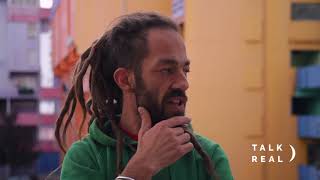
Last November the Friedrich Ebert Foundation organized the "Reclaim Europe" conference in Lisbon to discuss various urban perspectives and transnational strategies. The moment was taken by European Alternatives to hear some of the local actors on the subject. António Brito Guterres is a researcher at the DINÂMIA’CET – Centre for Socioeconomic and Territorial Studies of the Lisbon University Institute, Portugal. He works on the topics of urban commons, resistance, building alternatives, urban culture, and urban socio-changes. In the last 15 years, he has gained experience in various projects of territorial development, in particular as the director of the Vale da Amoreira Operation of the Critical Urban Areas Initiative, and as the coordinator of the Performance Arts Center in the same neighborhood. He currently works for the Aga Khan Foundation Portugal, focusing on issues such as participation, governance, education, youth, diversity, and pluralism.
- Conference
Conferência de Abertura I Congresso Internacional Colonial and Postcolonial Landscapes Architecture, Cities, Infrastructures COUNTERING THE TABULA RASA ARCH. HELDER PEREIRA ATELIER MULEMBA 16 de Janeiro | Auditorium 2 | 19h00 Fundação Calouste Gulbenkian Open to public The systemic problems present in Angolan built environment(s) today reflect historical processes and the continuation of certain aspects of late-colonial ideology by post-colonial actors in the period following independence and the civil war. This presentation seeks to provide a critical reflection on this history, challenging assumptions commonly held by the public, practitioners and policy makers alike, and problematising certain narratives that are frequently present in the discussion of architecture in Angola. Beginning with the erasure of the pre-colonial and the birth of an extractive economy, continuing through to modernist era ‘nation building’ and the post civil war construction boom, we aim to politicise that which is often presented as ‘neutral’ or ‘objective’. In doing so, we hope to identify the opportunities that are in front of us when looking into an uncertain future, and outline philosophical considerations for contemporary and future designers, architects, engineers, urban planners and other construction industry professionals, whether practitioners, educators, or working within governmental organisations), along with policy makers.