Call for Papers - VI Lusophone International Meeting All the Arts | All the Names
ABSTRACT SUBMISSION
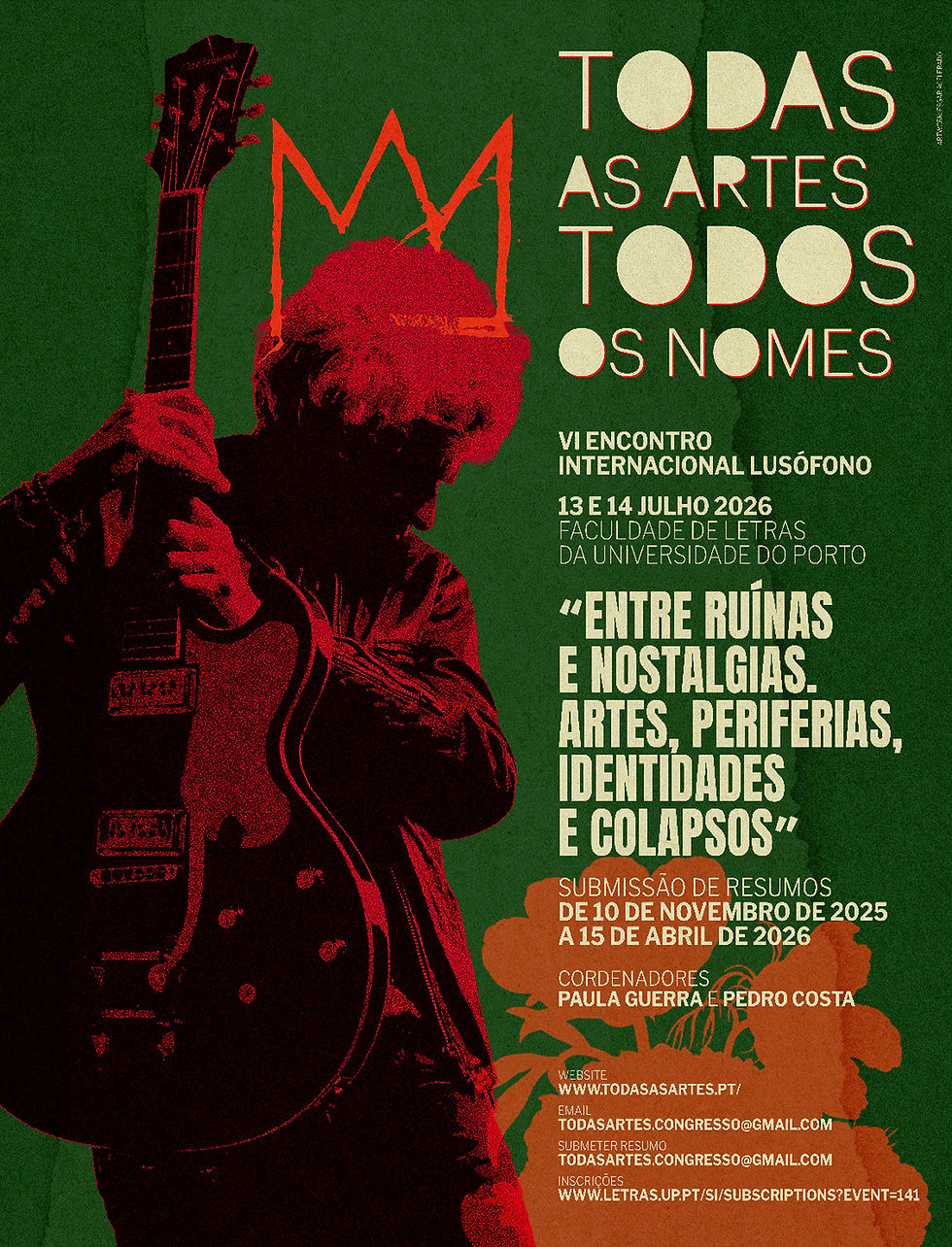
From November 10 to April 15, 2026.
DATES
July 13th and 14th, 2026
VENUE
Faculty of Arts and Humanities of the University of Porto
Bringing together Brazilian, Portuguese and other national researchers, the VI International Meeting of the All the Arts Network | All the Names, which will take place in the city of Porto, on July 13th and 14th, 2026, proposes to reflect on the place of popular culture and the aesthetics of "bad taste" in contemporary cultures. Starting from popular expressions such as pimba and brega as finished examples, this meeting invites a critical analysis of what are the sound, visual and performative margins of culture and the arts today, questioning the mechanisms of distinction, hierarchization and artistic legitimation that define them.
In recent decades, the so-called "bad taste" has been recurrently associated with a popular, kitsch, sentimental and melodramatic aesthetic, often devalued by the cultural elites - as Bourdieu already told us in his seminal works - but deeply rooted in the collective imagination. Today, we are witnessing a revaluation and revival of these expressions, as artists, DJs, producers and curators rescue the peripheral, the pimba, the brega, the arrocha or the tecnobrega, transforming it into a symbol of identity and belonging, of memory and nostalgia. Between nostalgic celebration and critical reappropriation, the revivalism of popular culture - in these times of war and ruins - raises questions about memory, authenticity, class, gender, regionalism and the (de)coloniality of taste. This time, this Meeting proposes a plural and interdisciplinary debate on these expressions, convening the views of sociology, anthropology, musical studies, cultural studies, communication and performing arts, among others.
The fulcrum lies in the need to think of the pimba, the peripheral and the brega not as anomalies, but as devices of memory and resistance, forms of expression that reveal the contradictions of late modernity, globalization and the hierarchies of taste. Thus, the aesthetics of "bad taste" emerges, here, as a language of subversion, that is, as a space where excess, sentimentality and irony destabilize boundaries between the erudite and the popular, the urban and the rural, the national and the transnational.
This time, the event will bring together researchers and creators from different areas — such as sociology, anthropology, philosophy, urban studies, architecture, visual arts, music, literature and technology — who explore both Lusophone popular cultures (pimba, brega, funaná, kizomba, kuduro, sertanejo, popular fado, among others) and their revivals and recontextualizations in cinema, visual arts, fashion, the internet and youth cultures. So, continuing the mission of the All the Arts | All the Names, this VI International Meeting encourages innovative and critical approaches that intersect art, science and society from the Global North to the Global South in a (counter) (de)colonial impetus.
Since its creation in 2016, the Meeting has been working towards convergence, communication and exchange between researchers and research networks on art in the areas of sociology, anthropology, economics of culture, cultural studies, urban studies, architecture, history and the arts, among others. In this way, the presentation of research results and debates around art, its spaces and hierarchies; the relations between art and the public sphere; cultural institutions and artistic practices in contemporary culture; the connections between sociology, anthropology and contemporary art, among others; street arts, graffiti, the city and youth; urban landscapes, arts and cities; curatorships, engagements and artistic identities; art criticism; cultural and artistic diversity; identities, cultures, diasporas and nationalities; art and globalization; art, technology and the (dis)enchantments of the world; documentary film and ethnographic narratives; objects, memories, heritages and collections; perspectives on the body, gender and fashion in contemporary times; the questions of expanded poetics and resistance music; theater, creation, language and contestation; the festivalization, the events and the cosmopolitanism of contemporary culture; underground and subversive artistic manifestations; publications on art and social life; the role of the arts in social inclusion; the relations between artistic action and cultural policies and the development of territories.
HOW TO SUBMIT
Proposals should be sent to the following email address: todasartes.congresso@gmail.com
We recommend consulting the congress website for detailed information regarding submission guidelines, thematic areas, and updated deadlines.